

Paris, 14 October 2026 – European aviation leaders came together in Paris on 13 and 14 October for the 13th edition of the ECAC/EU Dialogue, to examine current efforts to build the resilience of the aviation sector and identify what more can be done through cooperation to sustain and grow air transport across the European region.
Aviation leaders called for better preparedness from regulators and industry, and for a holistic approach from all stakeholders, to take an ecosystem-wide approach to improve resilience across the aviation sector as a whole. They agreed that better use of data and AI tools in analysing emerging risks would enable the sector to better anticipate risks rather than focusing on purely reactive methods. They also emphasised the vital importance of open and transparent data sharing and analysis for timely responses to new or evolving crises.
This year’s event saw 134 participants, spanning 33 countries and 47 industry organisations and associations, gather in the French capital over two days to share practical approaches to resilience and risk management, and explore new and innovative ways to safeguard the sector against current and future challenges.
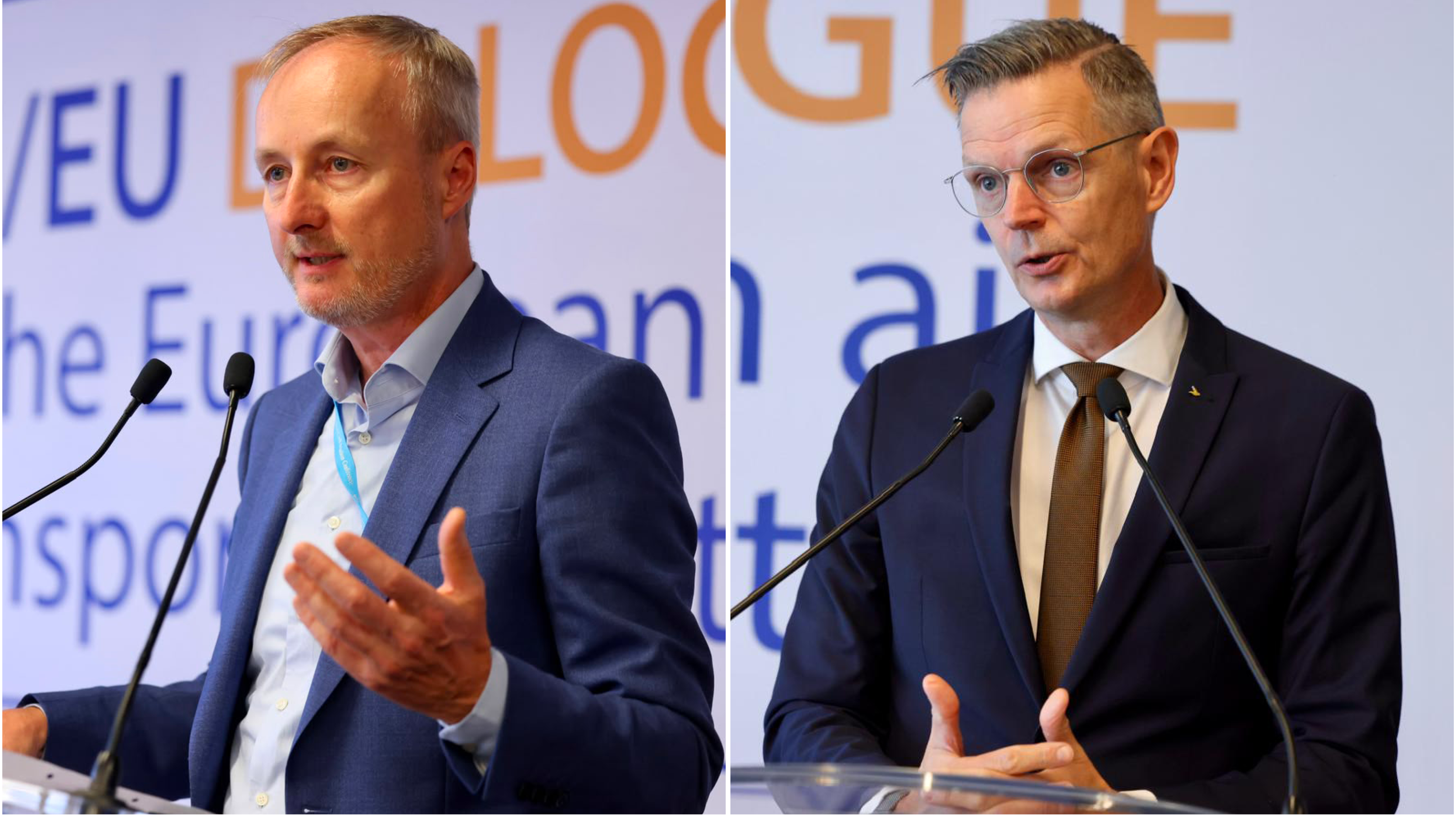
Henri van Faassen, Director for Civil Aviation, Strategy and Resilience, the Netherlands, Vice-President of ECAC and ECAC Focal Point for Economic matters, together with Filip Cornelis, Director for Aviation, DG MOVE, European Commission, opened the Dialogue. Mr van Faassen recognised that the aviation sector is currently facing complex challenges that serve to threaten its resilience. In his remarks, he underpinned: ”organisations that effectively apply resilience capitalise change, build trust and create competitive strength.”
Over the course of the Dialogue’s three sessions, high-level representatives from industry and regulatory authorities, together with participants, stressed the importance of maintaining resilience in the aviation sector, exchanging practical approaches to monitoring and addressing threats to connectivity and competitiveness from different internal and external forces.
Key topics discussed were geopolitical tensions, energy transition, investment and access to finance and technological transformation. Speakers shared their experiences in addressing major challenges, and debated what further action could be taken to protect growth and sustainability in the aviation sector, whilst also building long-term resilience. Regulatory crisis and contingency planning, and anticipatory analysis of emergent risks were underlined as two important steps towards this.
In his closing remarks, Filip Cornelis said: “Resilience is not just a destination – it is a continuous process of learning and adaptation. The risks will keep changing… and so we need our preparations to change with them. We need action from industry and regulators to be ready, and to give the industry the space to act. As we prepare the new EU Aviation and Aeronautics Strategy, we will drive a more competitive, sustainable and resilient future for European aviation.”
Henri van Faassen concluded: “This Dialogue has reminded us that real, practical resilience is not optional, but a necessity, linked to competitiveness, sustainability and connectivity… Resilience in one Member State can have a big impact on all Member States. So, we urge all to work together, as public and private organisations.”
For further information on the ECAC/EU Dialogue, visit the webpage.
©Photos Boris Taieb
— END —